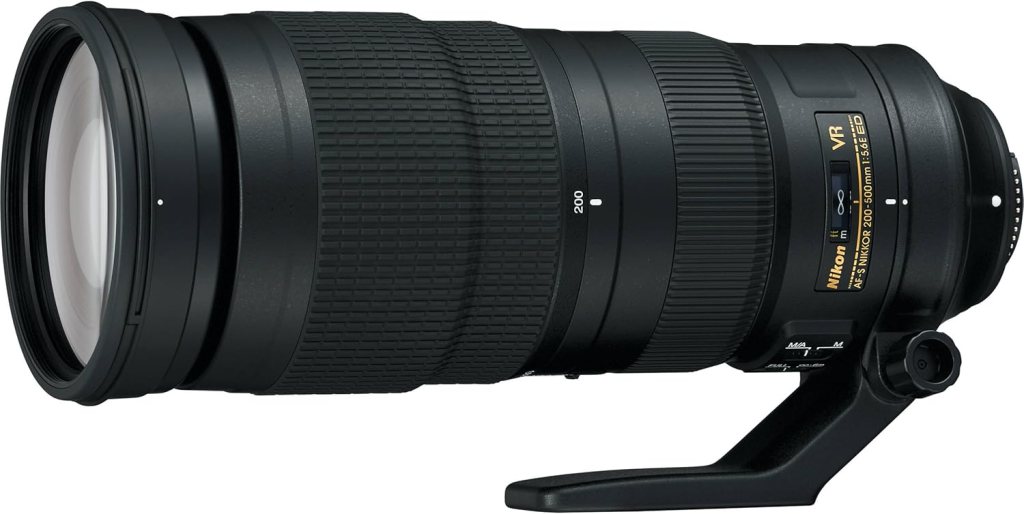


Anyone who’s spent time photographing wildlife, especially in zoos or at bird-rich locations like Selsø Sø, knows the frustration: You spot the perfect animal, the shot you’ve been dreaming of, and… you’re cut off by a fence, a moat, or—worse—a sea of open space you just can’t cross. No matter how hard you try, your lens just doesn’t get you close enough. You’re left cropping pixels or wishing you could get just a few meters nearer. That’s where I’m at. And it’s why I keep coming back to the Nikon AF-S 200–500mm f/5.6E ED VR.
Why This Lens?
I’ve been shooting wildlife and zoo animals for years, mostly using my trusted Nikon D7500 (DX) paired with the legendary Nikon 70–200mm f/2.8 VR and occasionally some older manual or budget telephoto lenses. Don’t get me wrong—the 70–200mm is brilliant for portraits and larger enclosures, and the sharpness at f/2.8 in good light is something special. But when I’m shooting smaller birds or anything that keeps its distance (especially at places like Selsø Sø, where fences keep you far from the action to protect wildlife), 200mm—even with DX crop and the 1.3x crop mode engaged—just isn’t enough.
The Challenge of Fences and Distance
Let’s talk real-world limitations. Modern zoos and bird sanctuaries are designed for animal welfare first, which is as it should be. But that also means more distance, more barriers, and fewer opportunities for those tight, frame-filling animal shots—especially with smaller, skittish species. Even with the “FX on DX” crop factor (my D7500’s 1.5x, plus the 1.3x crop mode), I’m still not filling the frame unless the animal walks right up to the glass (which, let’s be honest, never happens when you need it).
That’s where a 500mm lens starts looking less like a luxury and more like a necessary tool. At 500mm on DX, you’re effectively shooting at a 750mm field of view, and if you really push it with 1.3x crop, you’re up to almost 1000mm equivalent. That’s the difference between a tiny dot in your image and an eye-level wildlife portrait—even from the other side of a safety barrier.
Why the Nikon 200–500mm f/5.6E ED VR?
This lens has a near-legendary status for anyone serious about nature and wildlife photography, but not looking to sell their car for a super-tele prime. Here’s what you need to know:
- Constant f/5.6 aperture: Not the brightest, but perfectly usable on modern DSLRs—especially since the D7500 handles higher ISO pretty well.
- VR (Vibration Reduction): Four and a half stops of stabilization means you can shoot handheld, even in lower light or at the long end of the zoom.
- Sharpness: It’s crisp wide open, and you don’t have to stop down for pro-level clarity.
- Versatility: 200mm is still short enough for larger animals or tighter spaces, but 500mm is a game-changer for birds, shy mammals, or any scenario where you can’t (or shouldn’t) get close.
- Focuses down to 2.2m: Not macro, but enough for frame-filling shots of even relatively small animals.
- Build: Not a “pro” tank like the 400mm or 600mm primes, but solid, reliable, and not absurdly heavy.
The Reservation: Money and Priorities
Here’s the catch: It’s not cheap. Even at the discounted price I spotted before my upcoming vacation, it’s still a massive investment—one that would wipe out my “fun budget” for months. If I come home with money left, maybe I’ll take the plunge. If not, it’s back to saving, step by step.
I keep asking myself: Is it worth it? For me, as someone who shoots animals, birds, and the occasional zoo trip, the answer is “probably, yes.” But it’s a big step, and I’m not the type to jump on expensive gear unless it genuinely levels up my work.
What Would Change for Me?
- Birds at Selsø Sø: Finally filling the frame instead of pixel-peeping a tiny subject in Lightroom. No more feeling jealous of birders with their monster primes.
- Zoo Photography: Getting around fencing, moats, and enclosures to capture more natural, less “captivity” looking shots.
- Wildlife in Denmark: More opportunities for creative, immersive wildlife images without needing to sneak up or disturb the animals.
Final Thoughts: Leveling Up
If you’re a wildlife photographer on a DX Nikon body and you’re frustrated by “just not being able to get close enough,” the Nikon 200–500mm f/5.6E ED VR might be your next leap. For me, it’s about giving myself the chance to take photos I’ve always wanted, but never quite managed with my current kit. It’s about respecting the distance animals need, but still capturing the magic.
So, will I buy it? If the stars (and my bank balance) align after my vacation, yes. If not, I’ll keep saving. But one thing’s for sure—the next time I see a rare bird or a shy lynx behind a fence, I want to be ready.
Stay tuned for updates—and hopefully some new close-up wildlife shots!



 Kiba Snowpaw
Leave a comment