

By Kiba Snowpaw
Introduction
After years without any trips abroad, and far too many days spent at Netto and behind the camera in Denmark, I finally took the leap: 5 days in Zagreb with my friend. This was a journey full of nostalgia, strange déjà-vu moments, and a ton of new experiences – and maybe, just maybe, I’ve actually been here before…
Day 1: From Home to Zagreb – Early Start, Lost CDs, and Getting Our Bearings
Our journey started with more than a simple flight—it was a long, carefully planned operation. We’d decided to be in Zagreb a full three hours before check-in at the hotel. The idea was to have plenty of time to get from the airport into the city, not feel rushed, and (maybe most importantly) to do something as soon as we landed instead of just waiting around. In reality, this meant an extremely early start: up before dawn, a quick check of tickets and gear, and then into a taxi from my friend’s place all the way to Copenhagen Airport. The taxi cost 816 kr, which we split—expensive, but honestly worth it just to avoid dealing with public transport, dragging suitcases through stations, and stressing over schedules before even leaving Denmark.

Flying: Still Not Routine
Even now, as an adult, flying is not second nature to me. This was only my third time ever on a plane. The last time was over two decades ago on a trip to Romania with my mom—so despite all the planning, I felt a weird mix of anticipation and nerves the whole way through security, boarding, and takeoff. Airports have that in-between feeling—neither here nor there—and I never quite relax until the wheels are off the ground and I know the trip is really happening.
My friend, on the other hand, is a lot more used to travel. He handled the booking and seemed to have a better sense of what to expect, but I could tell even he was a bit on edge—first trip abroad together, after all these years.

Arrival in Zagreb: Leaving the Bags, Finding the Beat
When we landed in Zagreb, things moved fast. Immigration was easy, and we caught a taxi into the city without any issues. By the time we reached Livris Hotel, it was several hours before check-in. Luckily, the hotel staff were flexible and let us leave our luggage in their storage area while we killed time in the city. That’s a small thing, but when you’ve been up since the middle of the night, it makes all the difference.
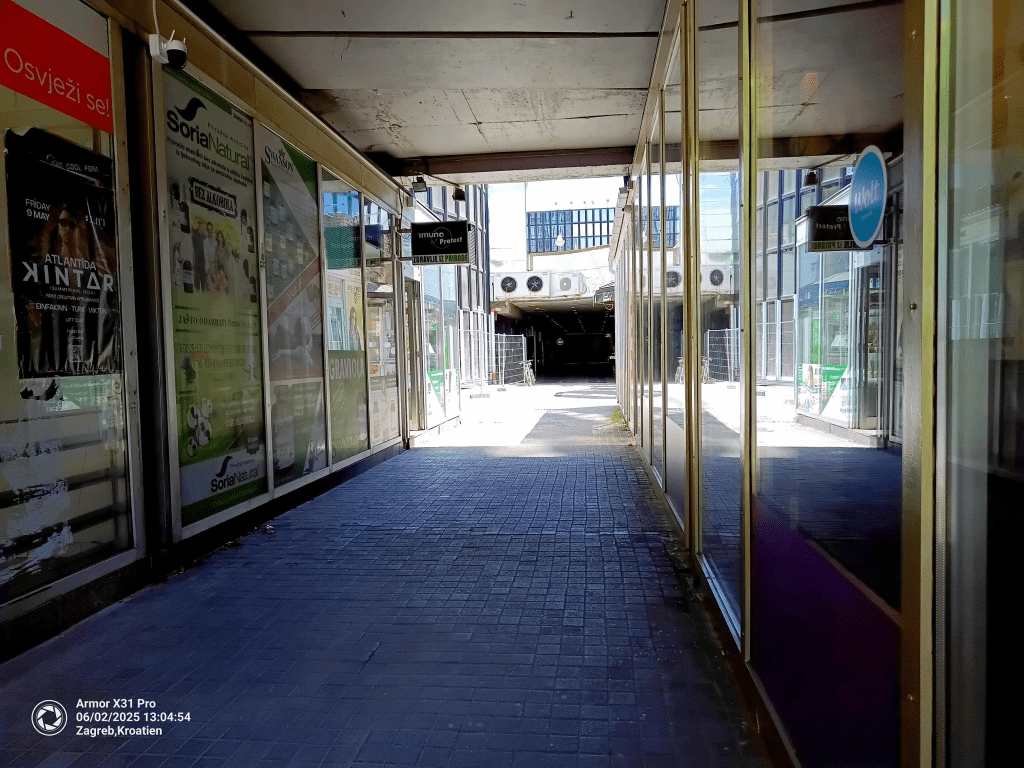
My friend had a mission: there was a CD music shop he absolutely wanted to visit. He’s a serious collector, and he was hoping to find some albums missing from his collection—stuff you can’t just order online or find in Denmark anymore. The shop was simply called CD Music, and it became our first real destination in Zagreb. Walking there turned out to be a brilliant move: it wasn’t just about the CDs, it gave us a crash course in the city’s street grid, public transport, and general vibe.


First Impressions of Zagreb
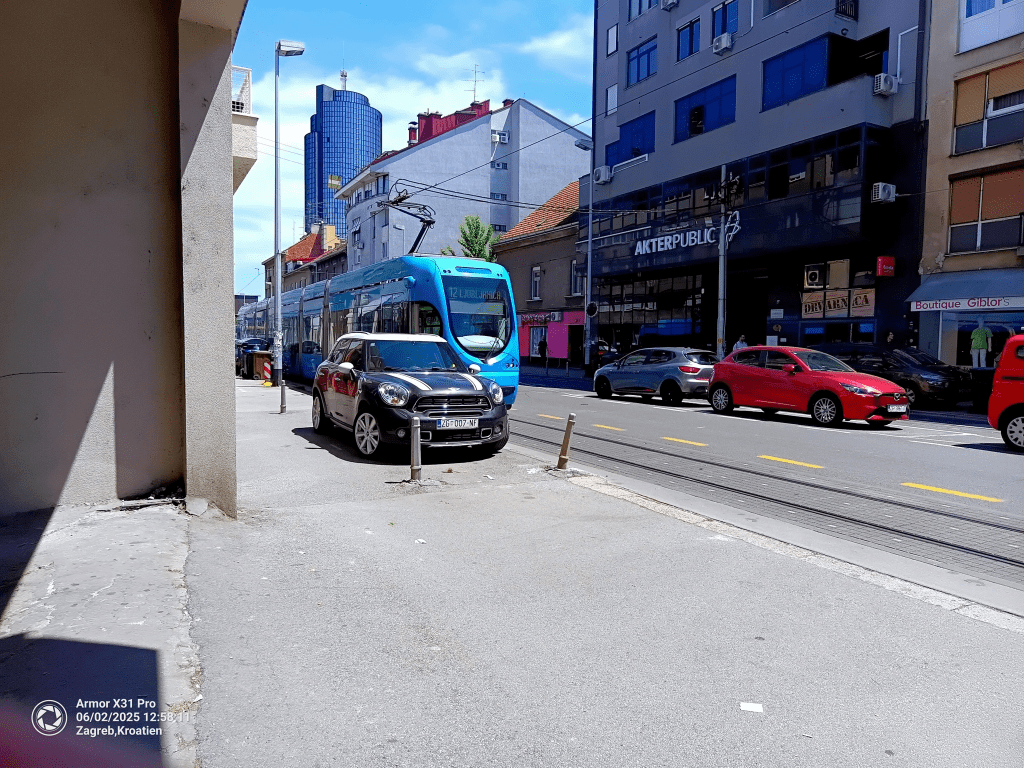
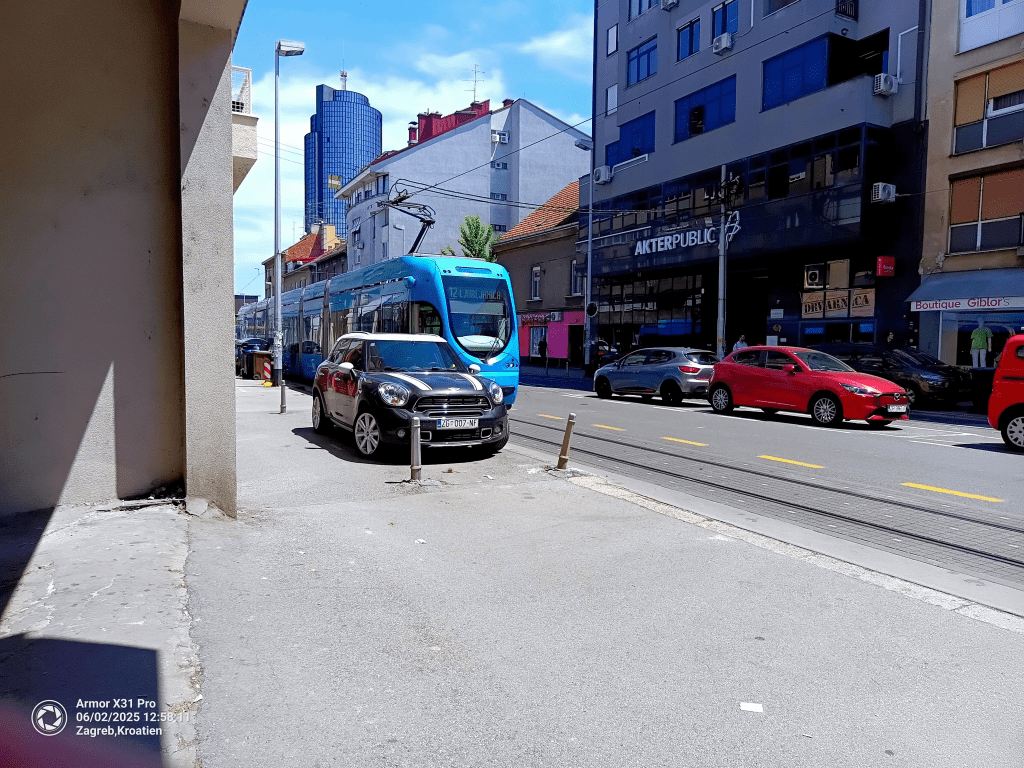
That first walk, dragging slightly from the trip but curious about everything, is what I’ll remember most. The air was warm—much more humid than Denmark. Trams rattled past every couple of minutes, and we quickly figured out which lines (6, 7, and 13) would be most useful for the next days. There’s something about walking a new city’s streets with no fixed plan and no bags that makes it easier to take everything in.
- The architecture was a mix of old and new: faded 20th-century buildings with peeling paint, flashy glass-and-steel banks, little bakeries, and modern supermarkets like UNION d.d. just a block from the hotel.
- People moved at a different pace, slower and somehow less stressed than at home.
- There were street musicians, lots of tiny cafes, and an almost endless stream of trams.
- I noticed a lot more smokers than back home—one of those small cultural differences that hits you the first day abroad.
The CD Music shop was a goldmine for my friend. He spent ages flipping through racks, scanning for rare finds, and chatting with the owner, who was happy to geek out about music. Meanwhile, I just took it all in—people-watching, noting the shop’s slightly musty air, the stacks of albums everywhere, and the sense of a place still thriving despite Spotify and streaming. The experience was more than just about music; it was our way into the city.
Hotel Check-in: Dividing Up the Territory
When we finally headed back to Livris Hotel, it was time to check in.
Here’s where things got a bit tricky:
- The hotel is split into a main building and a side building.
- Only the main building has an elevator, but there was only one available room left there.
- To have our own rooms, we both needed to stay in the side building, which meant no elevator.
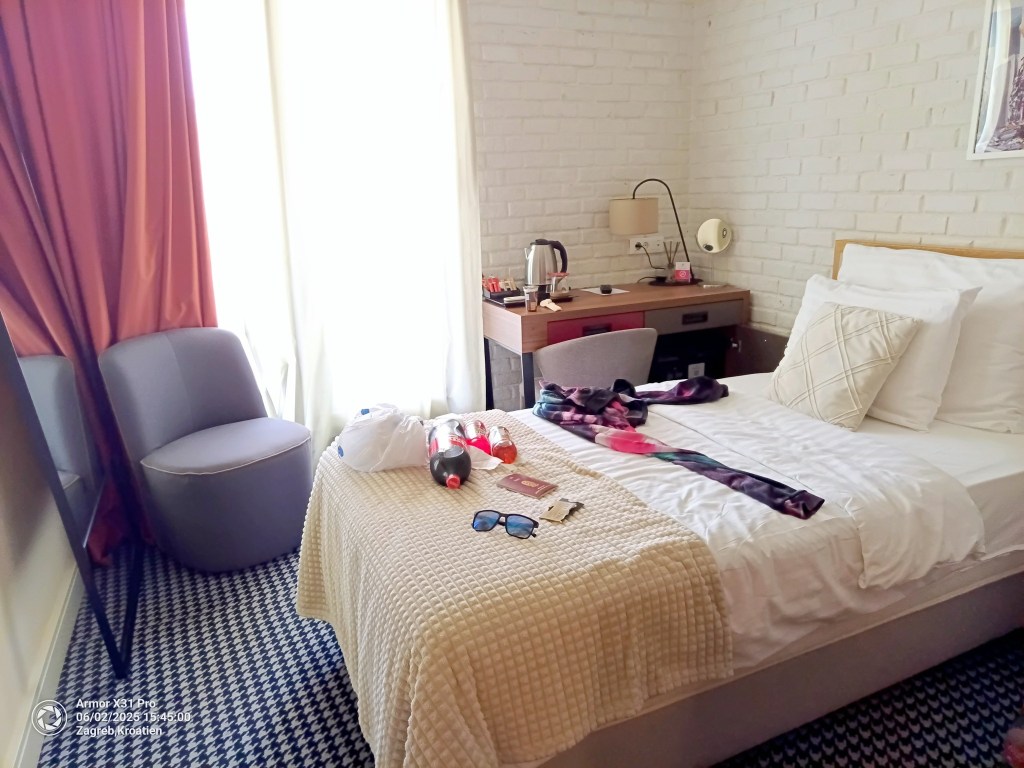
Because my friend has bad knees, he picked the ground floor room (114), leaving me with room 312 on the third floor, which had a balcony. The climb up the stairs with my bag was a bit of a workout, but I was happy to have the balcony and the extra space (my friend’s room was noticeably smaller and darker).
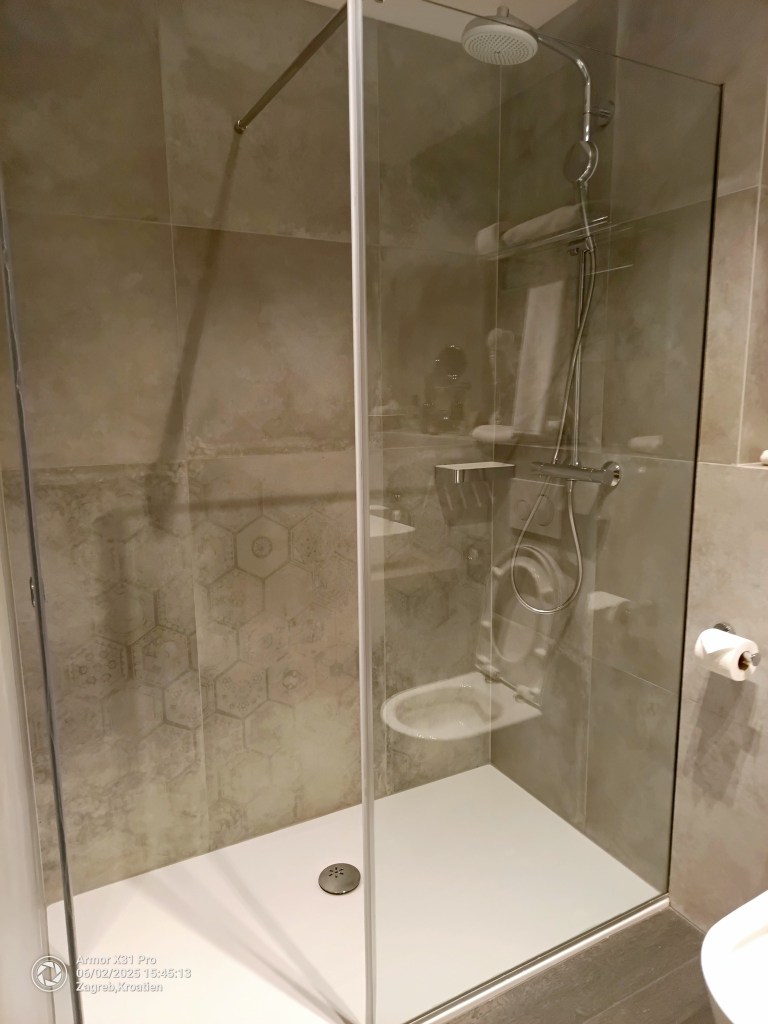
The hotel itself wasn’t new or recently renovated, but it was clean and serviceable. Rooms were tidied up daily, though I had to improvise with a shopping bag from UNION d.d. as a trash liner—there were no bin liners in the room. Staff spoke good English and were helpful, especially with directions and luggage storage.


Neighborhood & Settling In
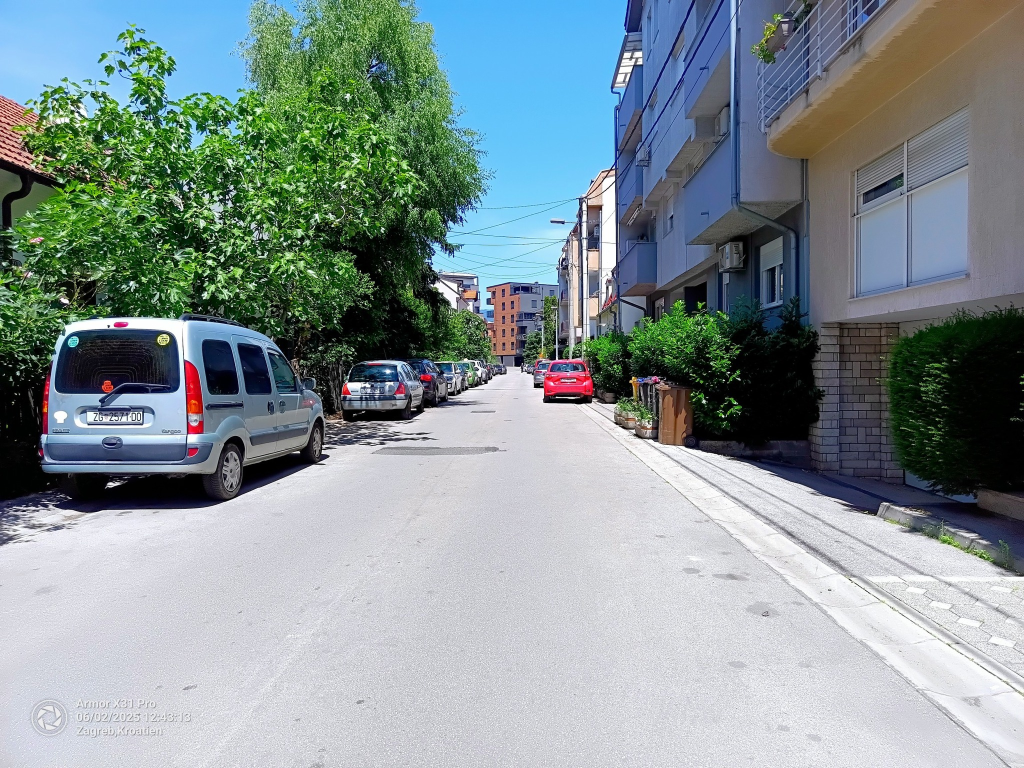
The best part about Livris Hotel, honestly, is the location.
- It’s just a few minutes’ walk from tram lines 6, 7, and 13—perfect for getting around the city.
- There’s a supermarket (UNION d.d.), small shops, and several bakeries nearby.
- The area felt safe, even at night.
Once we were checked in, we took a little stroll around the block to get a sense of our new neighborhood. Even after all the travel, I felt a rush of energy—maybe a bit of relief that everything had gone to plan so far, and a real curiosity about what the next days would bring. Zagreb was starting to feel just a little familiar already.
After a long day with an early start, airports, planes, taxis, music shops, and lots of walking, I was exhausted—but excited for what was ahead.
Day 2: Medvedgrad Castle, Zagreb Zoo, Maksimir Park, and a Chinatown Lunch
(June 3, 2025)
Our first full day in Zagreb started with a late morning in the hotel. After breakfast, we sat down and discussed what to do with the day. The weather looked good, so we decided to head out for something neither of us had ever seen before: Medvedgrad Castle, a 13th-century fortress perched on the southern slopes of Medvednica mountain, just north of the city.
Getting There: Taxi Adventures & Early Bird Perks
We called a taxi directly from the hotel, and the ride up through the green outskirts of Zagreb was almost an experience in itself. Medvedgrad sits about 500 meters above sea level, and as we climbed, you could feel the city fall away and the air grow fresher.
- Tip: The drive takes around 20–30 minutes depending on traffic, and costs about 15–20 EUR each way.
- We arranged with the taxi driver to pick us up again after our visit, since public transport doesn’t run all the way up to the castle.
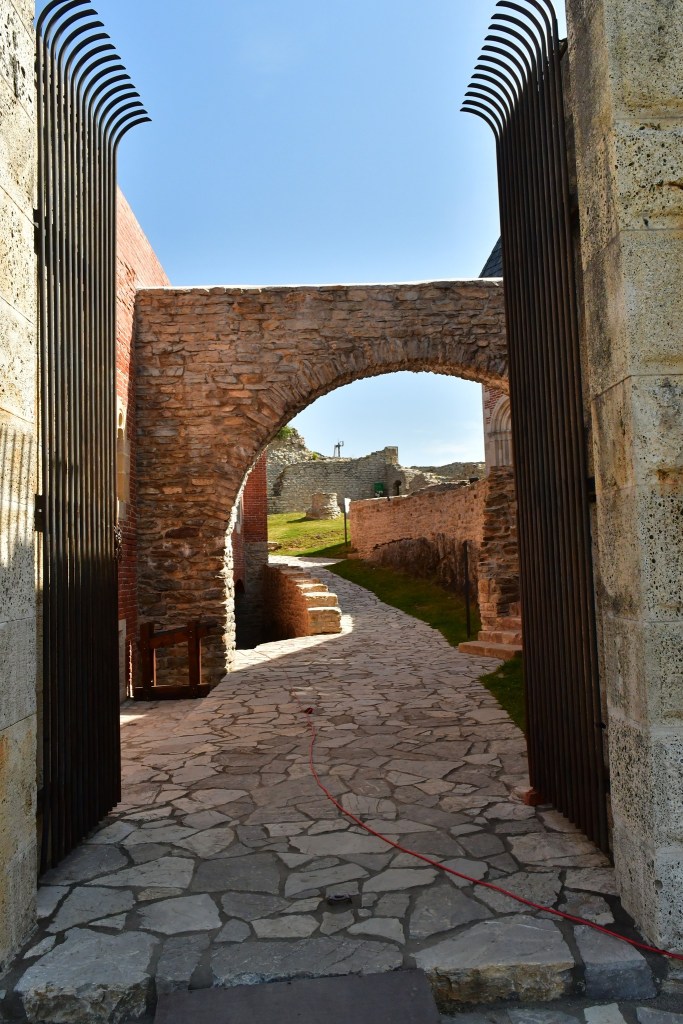
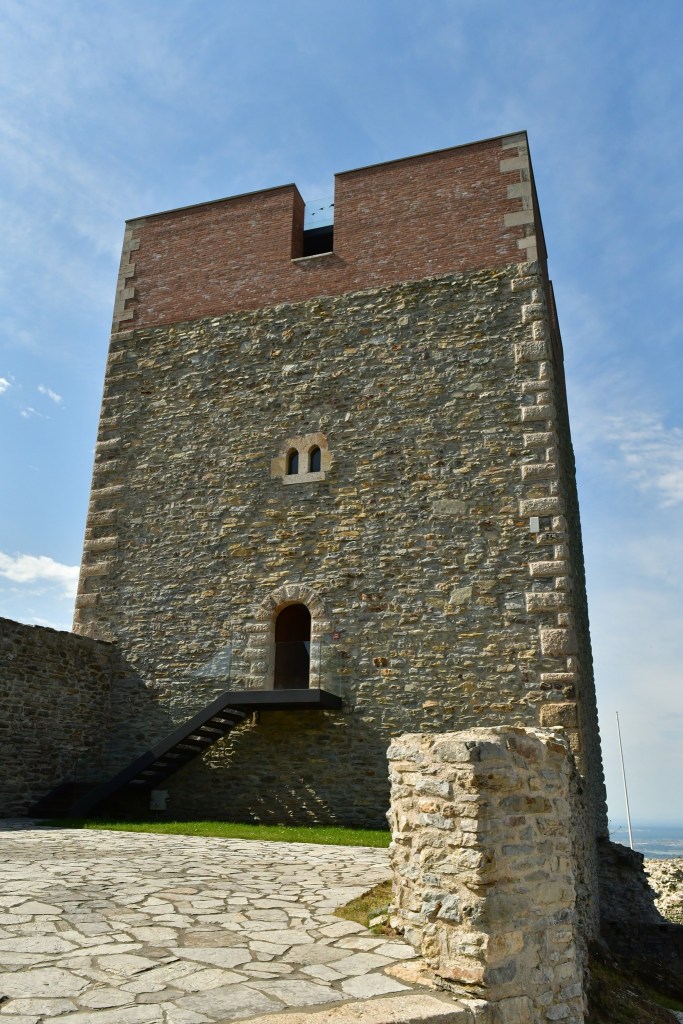
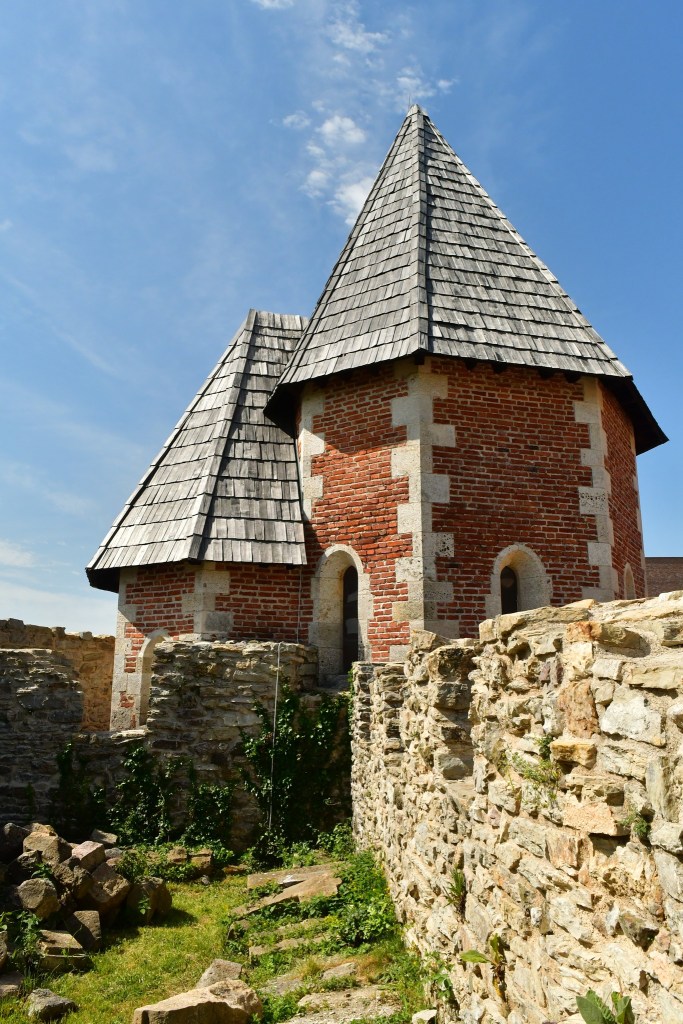
Arriving at Medvedgrad around opening time (09:00), we discovered we were basically the only visitors there—one of the few perks of getting up early on vacation! It meant we had the place to ourselves for nearly an hour before a school group arrived, so we could wander the old fortress walls and towers in peace.
Admission was only 8 EUR, which felt like a steal for such a historic site and incredible city views.
Medvedgrad Castle: History and Solitude
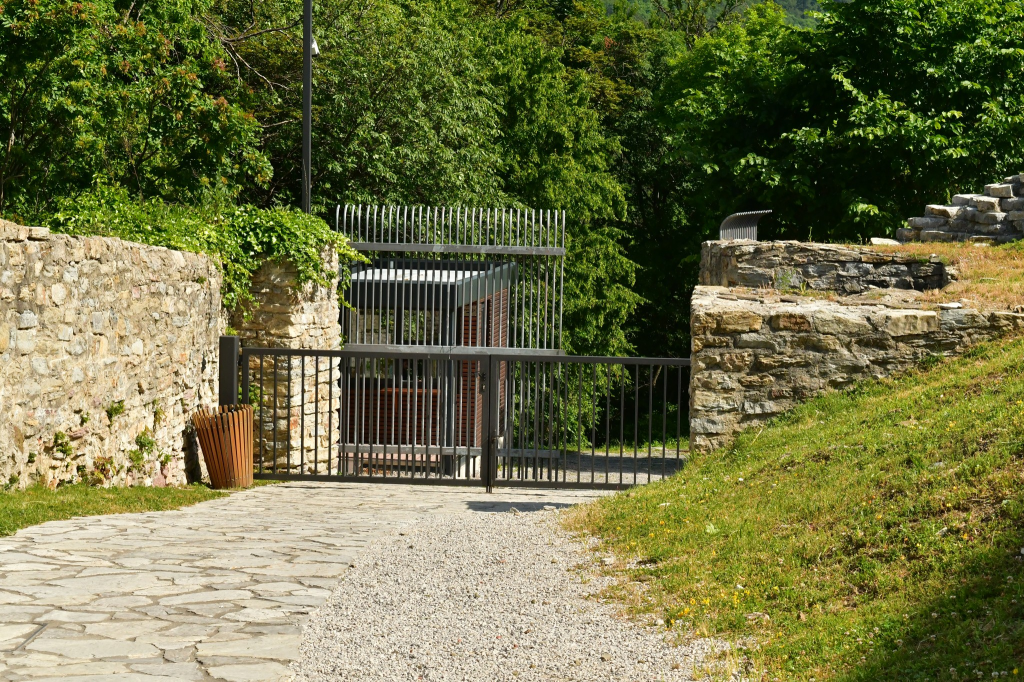
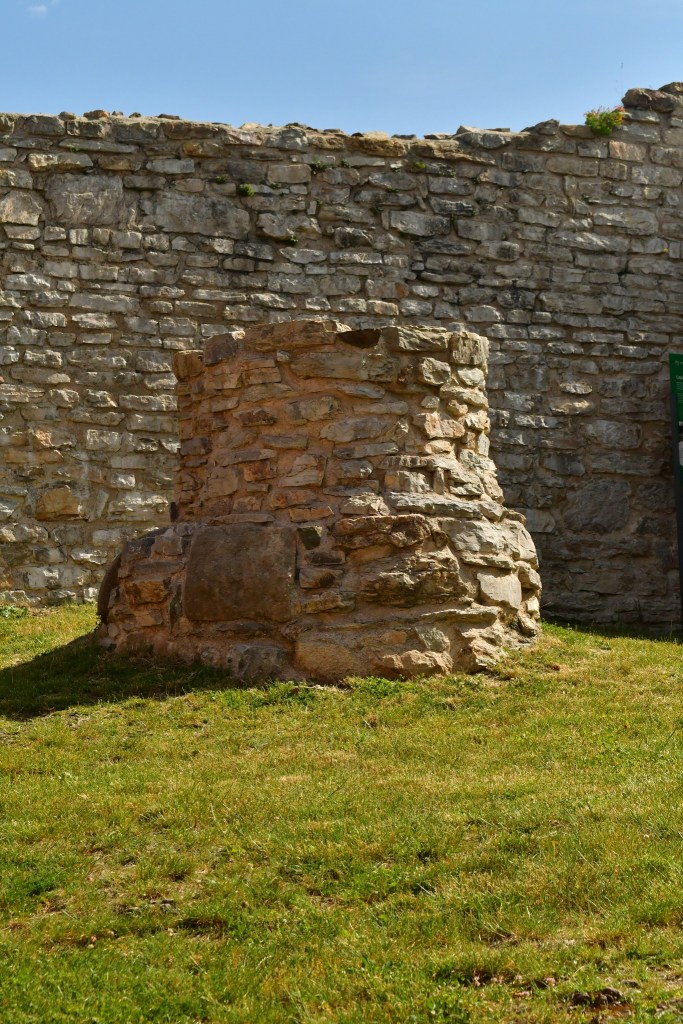
The castle itself is a mix of restored ruins and medieval atmosphere. Built in the mid-1200s to protect Zagreb from Mongol invasions, it’s been destroyed, rebuilt, and renovated many times over the centuries.
- The highlight is the panoramic view over all of Zagreb—on a clear day, you can see forever.
- There’s a small museum inside, lots of information boards (in English and Croatian), and the “Altar of the Homeland” memorial just outside.
After exploring, we called the taxi as agreed. By the time we left, a school class had arrived and the place was already starting to feel busier, so our timing was perfect.
Zagreb Police Museum – or Not
Our next planned stop was the Muzej policije (Zagreb Police Museum). Here’s where things got a bit confusing. The taxi driver tried to help us figure out how to get in, and the people at the site told us we needed a reservation. At the time, we figured maybe it was closed for the day, or some leftover COVID policy, so we gave up and left.
What we later learned:
You actually don’t need a reservation to visit the museum itself—walk-in visitors are welcome for the main exhibits. A reservation is only needed if you want to access special collections or see items not on regular display. So there was a clear miscommunication, and unfortunately, we missed out because of it.
Lesson learned:
Don’t always take the first “no” for an answer—sometimes it’s just a misunderstanding, and it’s worth double-checking entry rules on the museum’s official website.
Zagreb Zoo: First Impressions, Low Prices, and Some Disappointments
Since the museum was a bust, we switched gears. The taxi dropped us off near the entrance to Zagreb Zoo in Maksimir Park. At this point, my friend headed back into the city center—he’s not really an animal/nature person, so he went off in search of shops and cafes while I tackled the zoo solo.
The Zagreb Zoo is much smaller than I expected—only 7 hectares, compared to Copenhagen Zoo’s 11 hectares. But because it was all new to me and everything was more tightly packed, it actually felt bigger at first.
- Entry was only 4 EUR—which blew my mind compared to the 33 EUR it costs to visit Copenhagen Zoo. Honestly, it felt like pocket change.
Once inside, though, I could see why the price was so low.
- The zoo is undergoing renovations (and I later saw a lot of other Google reviews mentioning the same thing, so it wasn’t just my timing).
- Several enclosures, including the leopard and lion habitats, were either overgrown, blocked off, or looked like they hadn’t been used in a while. The lions were completely out of sight, probably because construction crews were working on the grounds in front of their enclosure.
- A lot of habitats are designed so the animals can stay inside all day if they want, with no incentive to come outside (unlike Copenhagen, where you can often see into the indoor sections). This means you can miss entire species if they don’t feel like coming out to play.
- The whole place had a kind of “work in progress” feel—not bad, just a little disappointing if you’re used to modern, interactive zoos.
Still, it was a fun experience and a nice walk for about 1½ hours. I took plenty of photos and enjoyed the different layout—even if some of the enclosures could use some love.
Maksimir Park: Green Oasis and a Needed Break
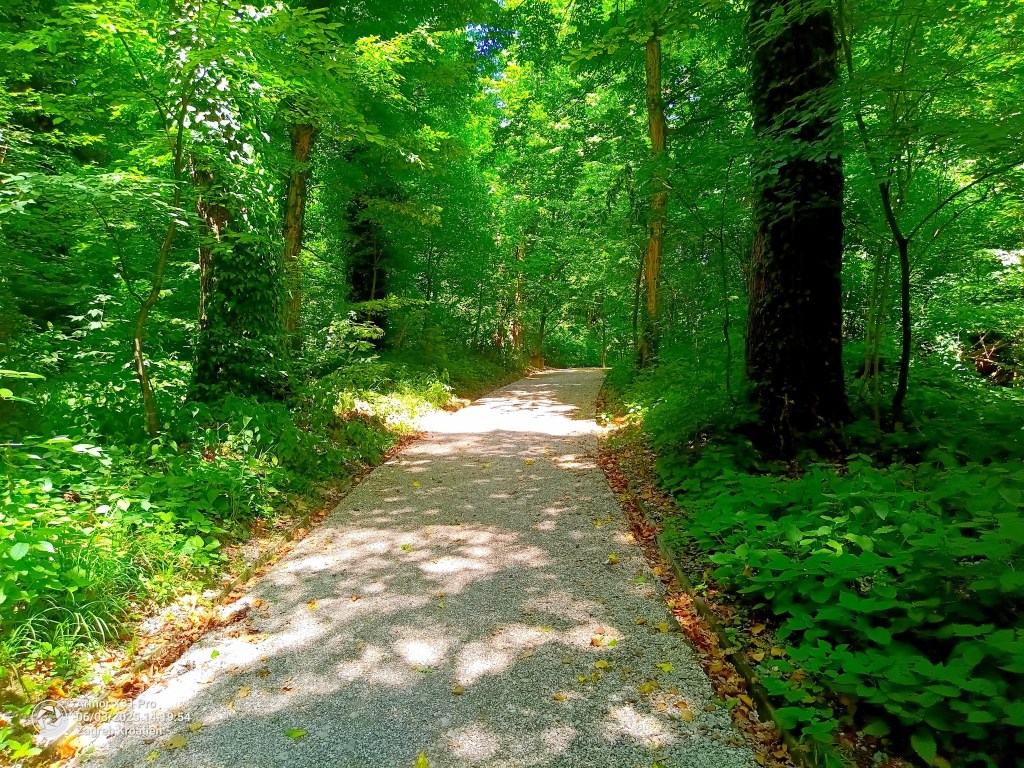
After the zoo, I spent another hour and a half wandering Maksimir Park itself. This huge city park (316 hectares!) is one of the greenest, most beautiful places in Zagreb, with lakes, old trees, wildlife, and people out for walks, runs, and picnics. It felt like a real urban oasis, and a great way to decompress after the crowds and noise of the zoo.
Tip:
- The park is free to enter, open 24/7, and home to several lakes, trails, playgrounds, and even wild turtles everywhere.
- In early June, the whole place is alive with birds, turtles, and flowers.


Afternoon and Dinner: Rest and Chinatown Eats
By early afternoon, I was ready to head back to the hotel. The rest of the day was pure relaxation: I uploaded photos, cleaned up, and just rested after the long morning.
Later, we met up for Dinner at China House in the city.
- Prices there were more than fair. I’d heard they’d raised prices recently, but honestly, compared to Denmark, it still felt cheap.
- I ordered the “Hruskava patka u umaku Osam blaga (ljuto)”—crispy duck in Eight Treasures sauce (spicy)—for 16.90 EUR.
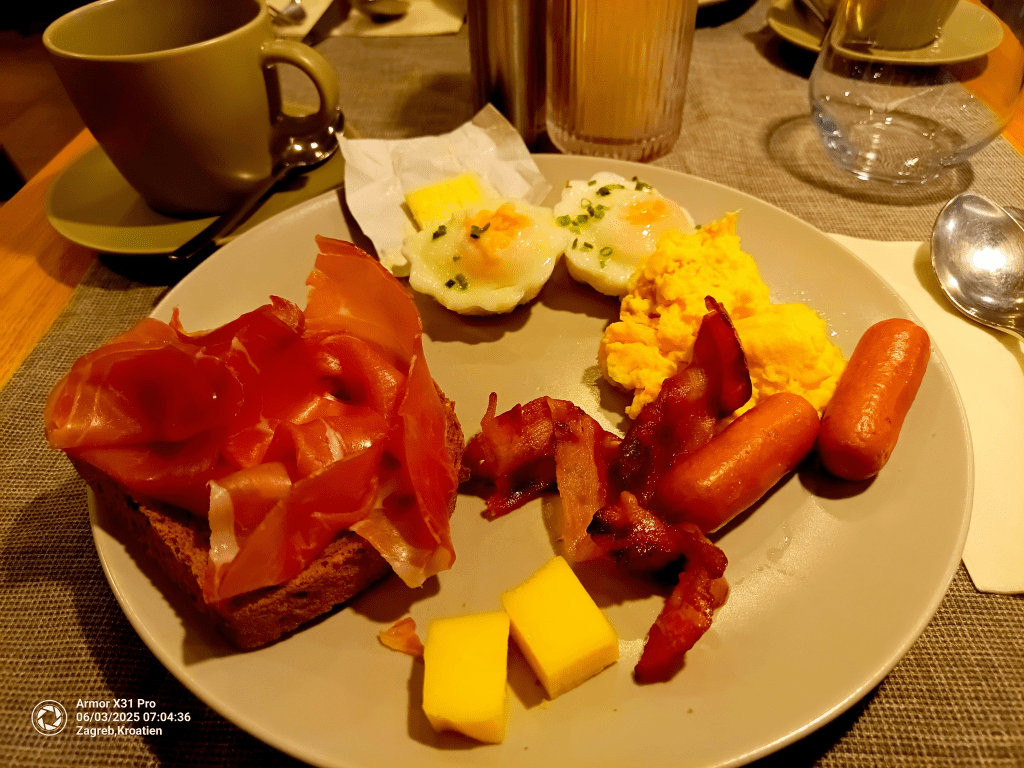
- The food was okay—nothing mind-blowing, but it did the job. Like a lot of Chinese restaurants, it had that feeling of “pre-cooked, heated up to order.” Still, after a long day, it was exactly what we needed.
We spent the evening relaxing at the hotel, talking over plans for the next day, and just enjoying being on vacation for the first time in years.

Day 3: Ozalj, Karlovac & A Croatian Detour
(June 4, 2025)
We started the day early, around 7:00 AM, with breakfast at the hotel. This would be one of our biggest day trips of the whole vacation—a classic “leave the comfort zone” adventure. The plan was to see a real Croatian castle, catch some small-town atmosphere, and maybe fit in a bit of military history along the way.
Getting to the Bus Terminal: Zagreb’s Autobusni Kolodvor
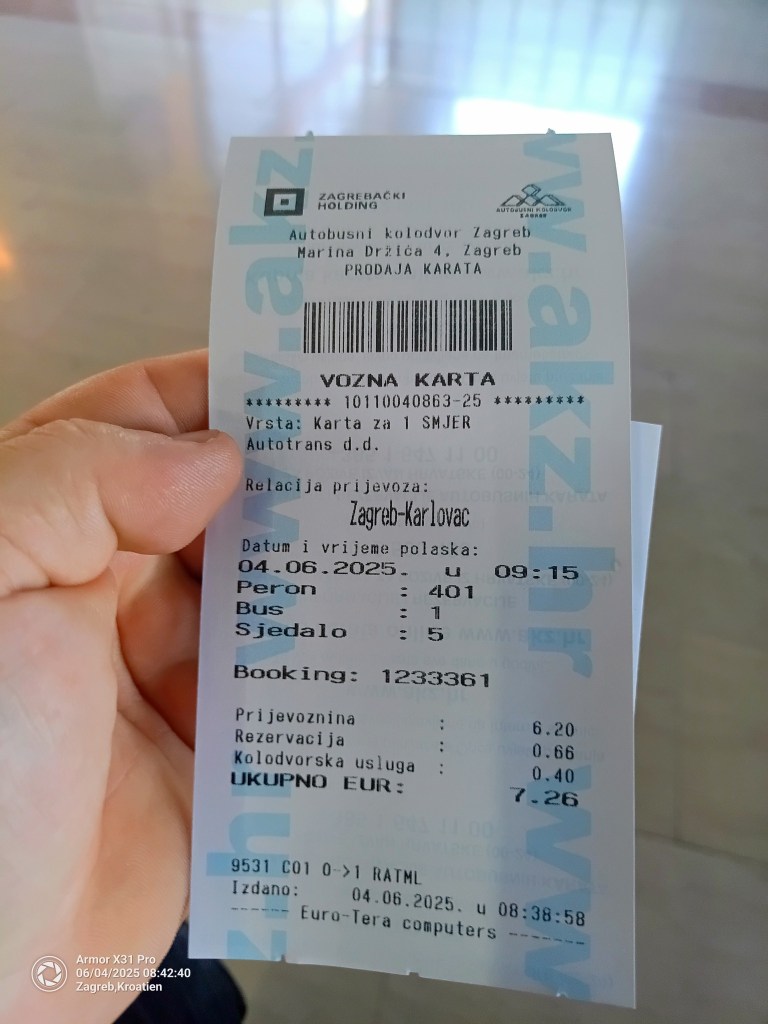
After breakfast, we packed our day bags and walked to Autobusni Kolodvor Zagreb, the city’s main bus terminal.
- The place is huge—almost like a train station, complete with ticket counters, shops, and big digital departure boards.
- It was surprisingly empty for such a big hub, and we were a bit confused about the process (and which platform to use), so we asked at the ticket counter. The staff spoke English perfectly and helped us get tickets to Karlovac, our first stop.
- The ride to Karlovac was comfortable and took just under an hour.
Taxi to Ozalj Castle (Stari Grad Ozalj)
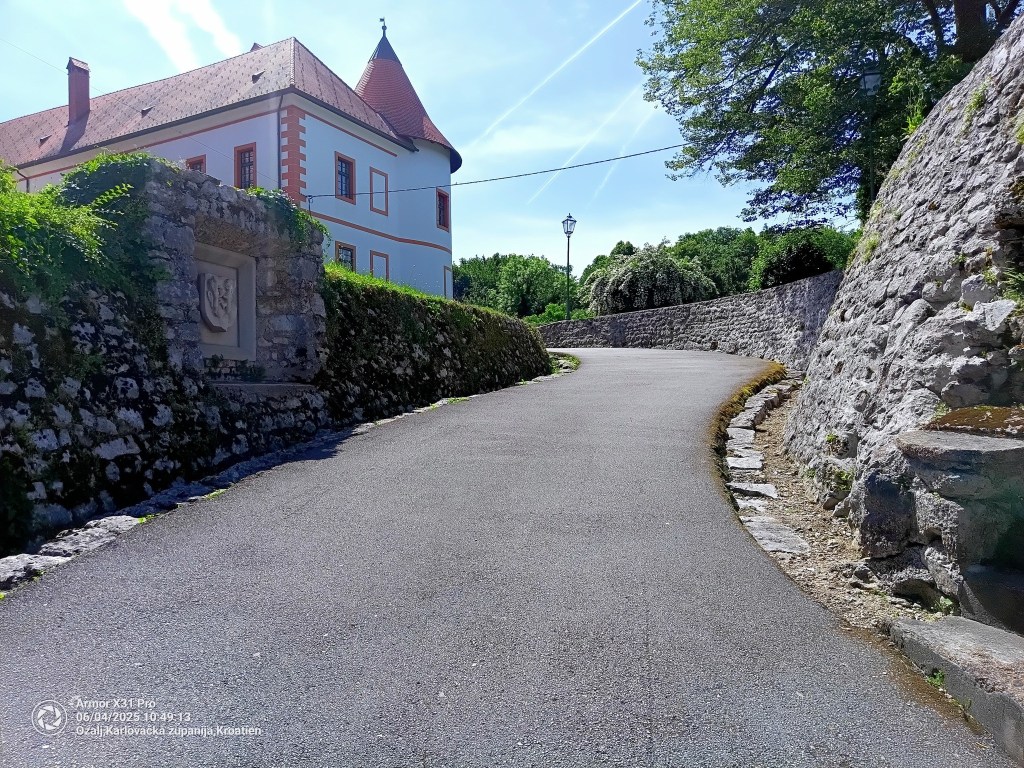
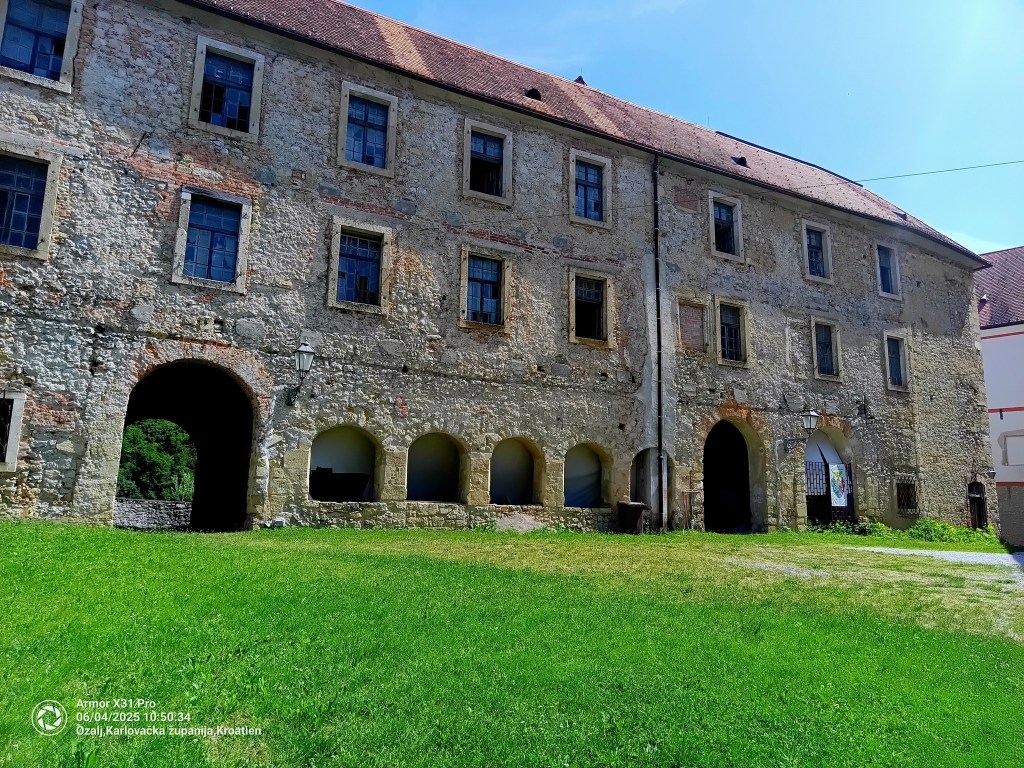
In Karlovac, we found a taxi and explained that we wanted to visit Stari Grad Ozalj, a historic castle perched on a cliff above the Kupa River. We asked the driver if he could pick us up again in about 1.5 hours; he suggested two hours instead, which was fine by us.
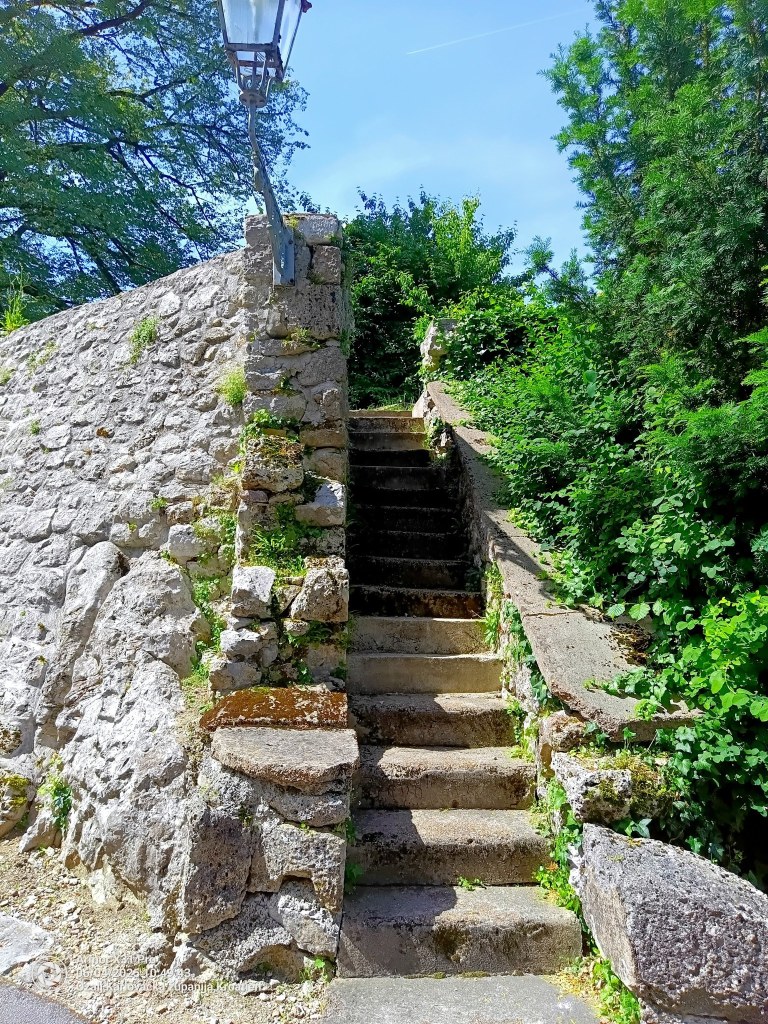
Ozalj Castle looks impressive from the outside, but a lot of the interior was closed or looked like it hadn’t been used in a while. We walked around the grounds and checked out the very small on-site museum.
- Oddly, there was no one at the entrance, so we just walked in. As we were leaving, someone finally appeared and told us tickets were 3 EUR each—we paid on our way out.
- The actual visit took maybe 30–45 minutes. There’s not a lot to see inside, but the views of the river and town are fantastic.

A Walk to the Hydroelectric Plant (Hidroelektrana Ozalj 2)
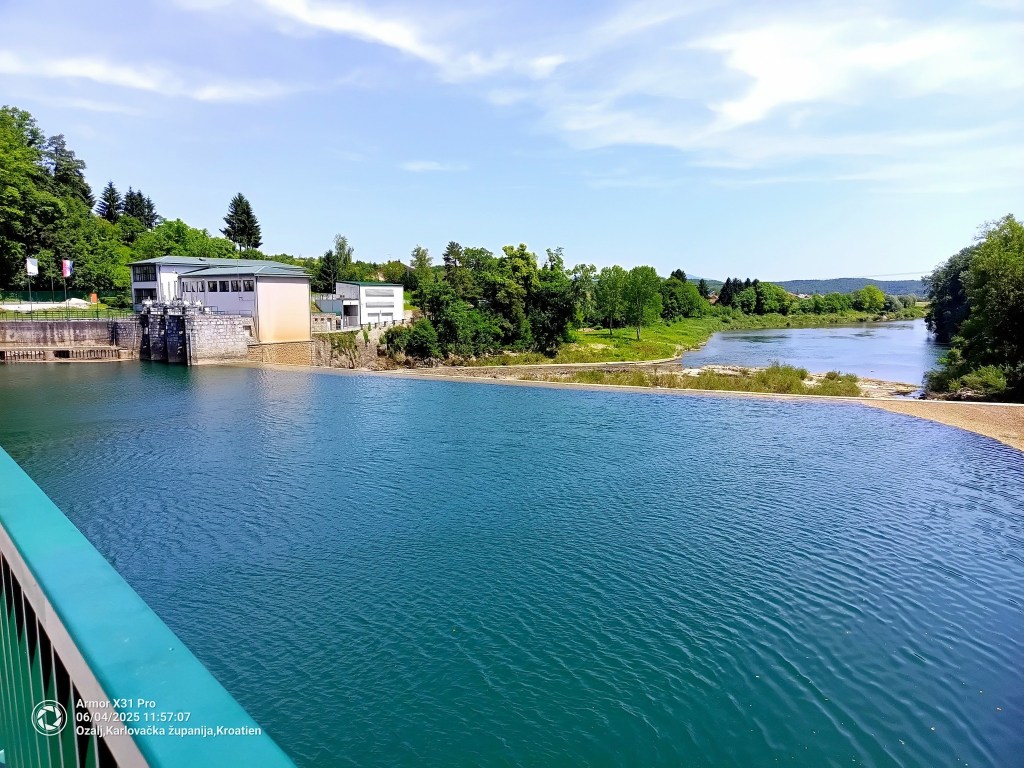
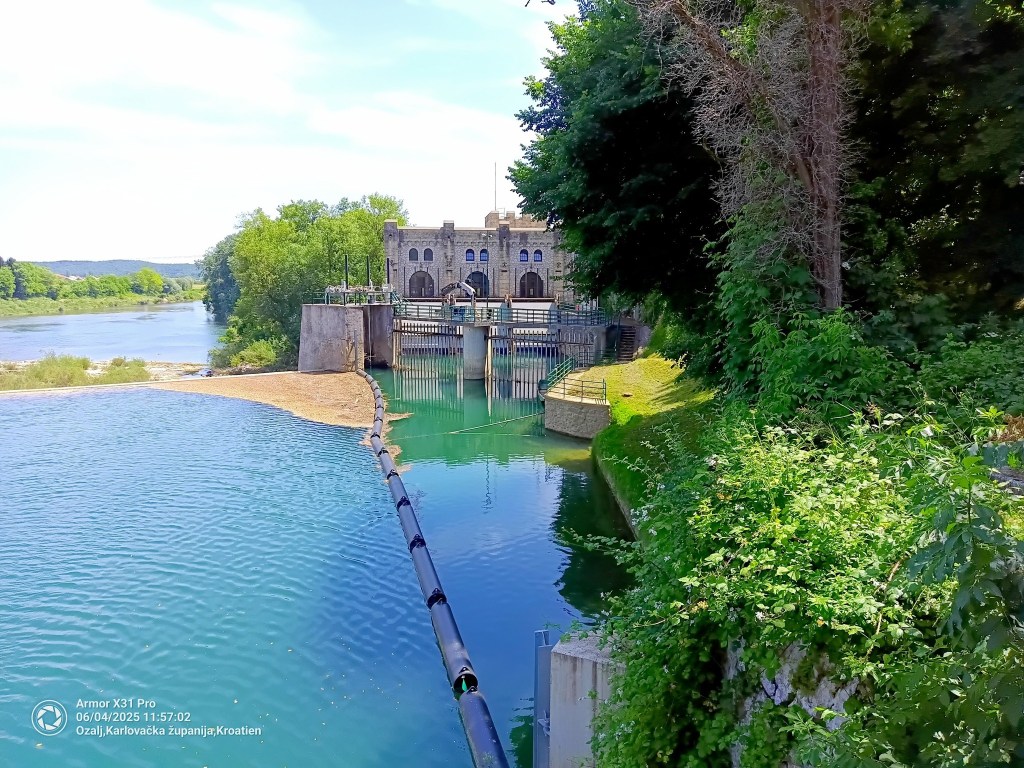
With plenty of time left before our taxi pick-up, we walked down into the town of Ozalj and across the Ozaljski Most bridge, which has a panoramic view of the river and the historic Hidroelektrana Ozalj 2 hydroelectric plant (built in 1908—one of the oldest still-working plants in Croatia).
- The walk was relaxed, and we even grabbed some ice cream on the way.
- Took plenty of photos from the bridge—the castle on one side, the hydro plant on the other.
Back in town, we grabbed a quick sandwich and enjoyed the sunshine, then headed back to the castle just in time to meet our taxi.

Homeland War Museum (Muzej Domovinskog rata Karlovac – Turanj)
From Ozalj, our driver took us to the Homeland War Museum on the outskirts of Karlovac.
- Entry cost 10 EUR per person.
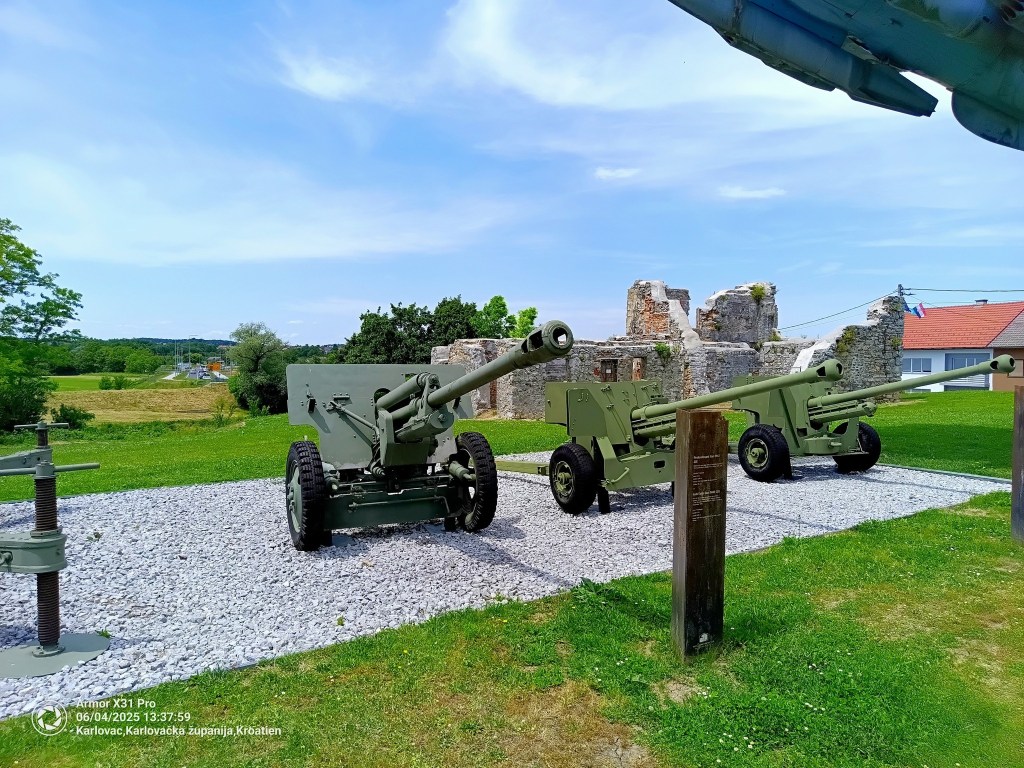
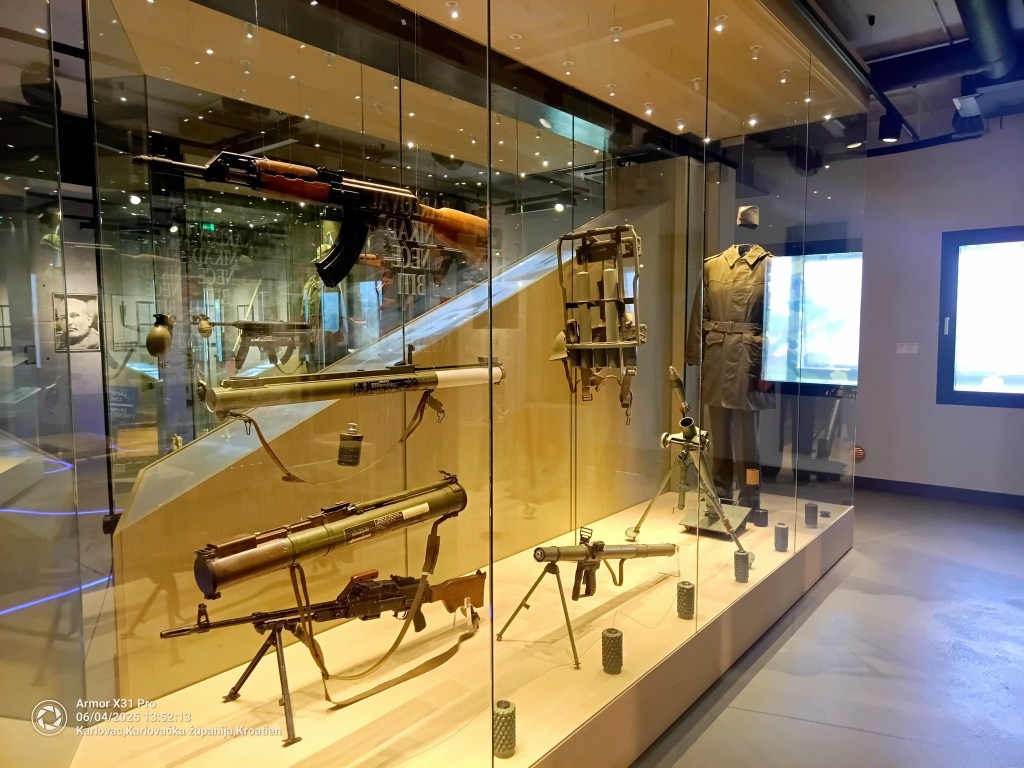
- The museum is a mix of outdoor exhibits (tanks, armored vehicles, artillery) and an indoor museum dedicated to the Croatian War of Independence (1991–1995).
- I’m not a huge fan of military history, but it was genuinely interesting—and offered a totally different subject for my photography.
We spent a while exploring outside and inside. I can’t remember exactly how long, but probably about 1–1.5 hours.


Super Konzum & The Race for the Bus
After the museum, we called a taxi back to Karlovac bus station (Autobusni kolodvor Karlovac).
- We literally arrived one minute before the bus departed—just enough time to see it leave without us!
- Buying tickets took too long, so we had an unexpected break: the next bus was an hour and a half later.
- Rather than wait at the station, we took a slow walk to a nearby Super Konzum supermarket (about 15 minutes away), browsed the aisles, and then wandered slowly back.
- The downtime was actually nice—no rush, just enjoying a regular part of local life.
Eventually, we returned to the station, caught our bus back to Zagreb, and made our way back to the hotel.
Dinner: Arena Grill on the Balcony
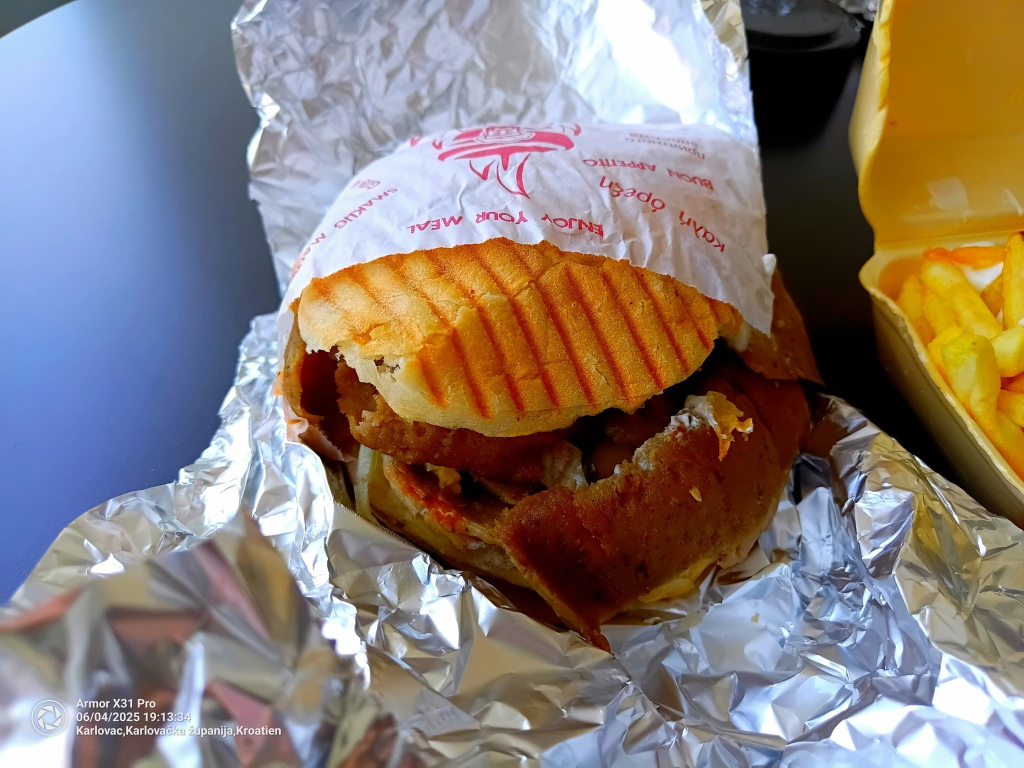
For dinner, we visited Arena Grill, a takeout spot near the hotel known for solid Croatian grill food (cevapi, burgers, sausages). We picked up our order and brought it back to the hotel. I ate out on the balcony of my room, enjoying the city sounds and the evening breeze. It was the perfect, low-key way to end a long day of exploring.
Day 4: Slow Walks, Hidden Graves, and Zagreb’s Local Secrets
(June 5, 2025)
After a couple of action-packed days running from castles to museums and missing buses, Day 4 in Zagreb was deliberately slower. Both of us needed a break, but there was one museum left to try.
Morning: The Elusive Muzej Policije
The previous day, after asking around at various stops, we’d finally learned that the Muzej Policije (Police Museum) didn’t actually require a reservation—you could just show up and ring the bell. So, around 10 AM, we grabbed a taxi across town. The museum’s entrance is tucked away, almost hidden behind a gate and wall.
- It took a little detective work to find the buzzer: I spotted it on the wall near the gate.
- My friend buzzed in, and after a short wait and some awkward camera surveillance (we couldn’t hear anything on the intercom), a staff member came out to let him inside.
- He went in alone; I decided to spend the morning wandering in Maksimir Park, just a few hundred meters away.
Tip: If you’re going to the Police Museum, just buzz the intercom—even if it feels like you’re sneaking into MI6.
Walking Maksimir: Forest, Memorials, and a Mysterious Grave
I headed into the far end of Maksimir Park, a wilder, forested section far from the playgrounds and lakes. Just beyond the trees, I came across a small bridge with a stone plaque reading “U spomen Ivek(u) ekipa”—a local memorial that, as far as I could tell, wasn’t on Google Maps yet. (I made a note to add it for future travelers when I got home.)
A short walk deeper into the woods brought me to one of the park’s strangest and most moving landmarks:
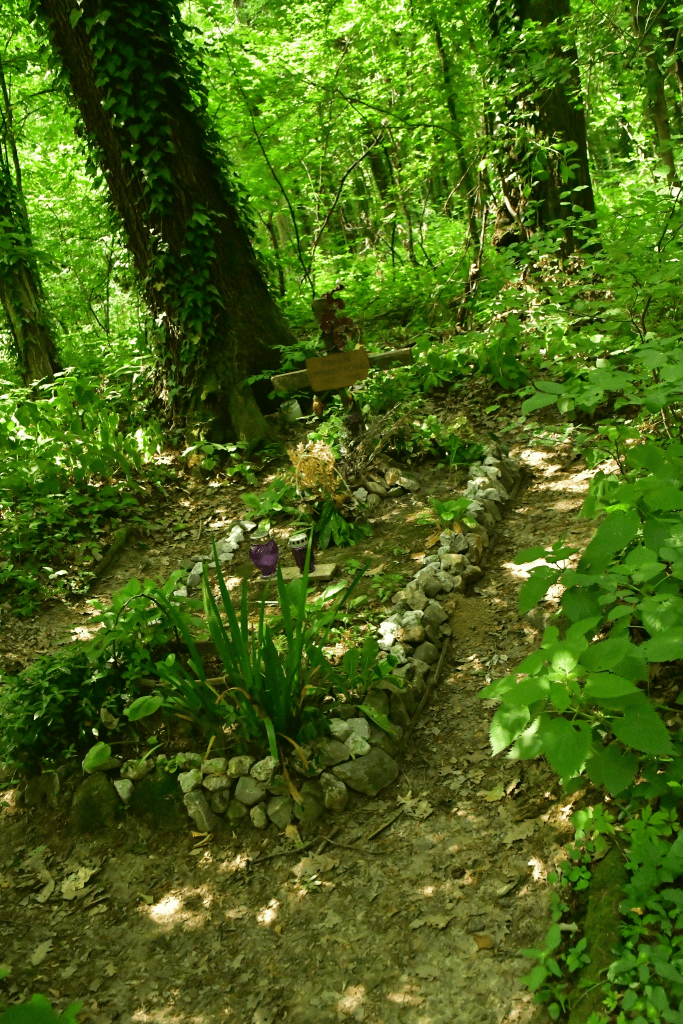
The grave of Franja Pismestrović (1902–1945).
Maksimir Park isn’t just a city oasis—it’s a landscape layered with history. Remnants of World War II still surface in odd corners: half-collapsed bunkers, overgrown monuments, and, in this case, an anonymous grave with a simple headstone.
- Who was Franja Pismestrović? According to oral histories, he was a Home Guard soldier from Sremska Mitrovica, mortally wounded during the last days of the war in 1945. He stumbled to the Sajko family home by Bliznec, where he was taken in but died overnight. Out of fear and respect, the family secretly buried him in the woods.
- The grave was kept up for years by the Marković family. Mrs. Ljiljana Marković first found it as a girl, brought flowers for years, and later learned the soldier’s name from the plaque. She even met Franja’s descendants decades later—a poignant reminder that even anonymous graves can connect people across generations.
- No official record exists of Franja’s burial, but the story lives on in local memory.
Seeing this grave, surrounded by forest, felt haunting and deeply peaceful at the same time—a glimpse into Zagreb’s quiet, hidden past.
After a few photos and some reflection, I wandered down towards the lakes. Maksimir is massive—over 300 hectares—and in this early part of summer, the woods were alive with birdsong and turtles sunning themselves on logs.
Museum Debrief & A Second Zoo Visit
My friend called after about 15 minutes: the Police Museum was small and took almost no time to see (about 15 minutes, tops). We met up near the park, then strolled together down to the entrance of Zagreb Zoo.
He wasn’t interested in a second round with the animals, so he headed back into the city while I took another solo turn through the zoo.
- On this second visit, I made a point of tracking down animals I’d missed the first time—sometimes catching them out in the morning sun or finally coming outside after hiding the day before.
- The zoo still felt like a work-in-progress, but with fewer crowds, it was easier to enjoy the quieter corners.
After about 1½ hours (and a couple of hundred more photos), I left the zoo and continued my exploration of Maksimir Park, visiting The Swiss House (Švicarska kuća) and the Sokolska mogila memorial, both hidden gems in the huge park.
The Long Walk Home & Evening at Gladne Oči
Instead of taking the tram, I decided to walk all the way back to the hotel through the city—a solid 4 km that took just over 40 minutes. It turned out to be a great way to see Zagreb’s neighborhoods at street level:
- Past cafes, bakeries, old Austro-Hungarian apartment blocks, graffiti, and local shops.
- The city is lively but not overwhelming, and walking gave me a real sense of everyday life.
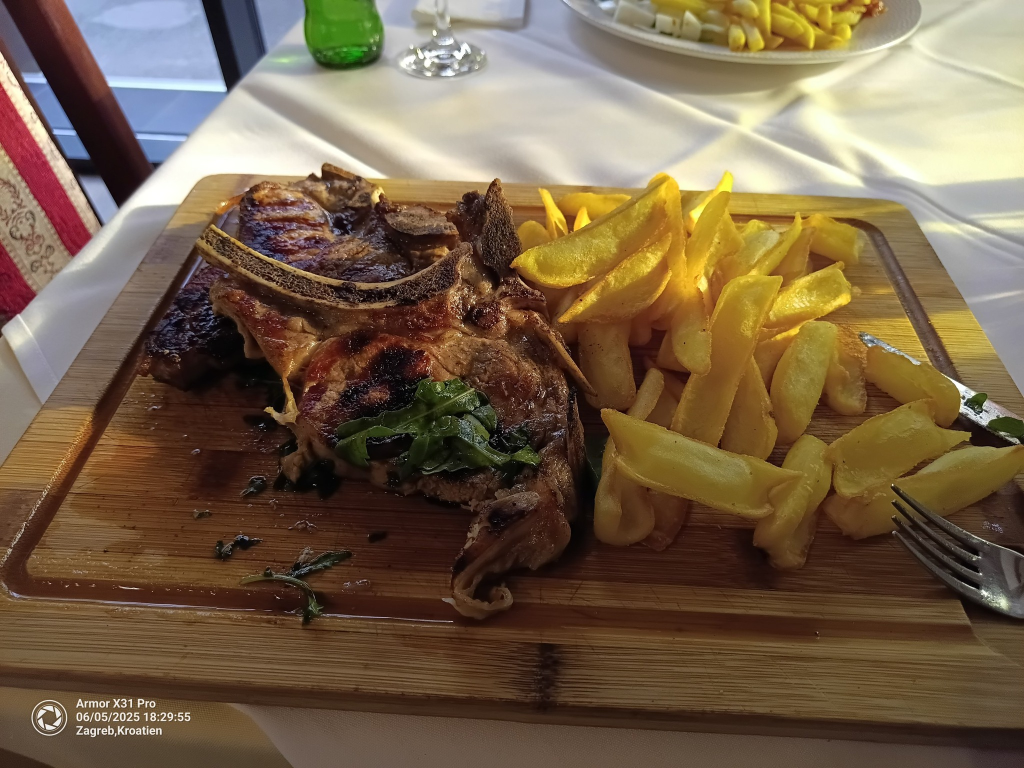
That night, we ate at Gladne Oči, a casual spot that was quiet and friendly when we arrived. The food was good—no complaints at all, and the prices were more than reasonable.
The rest of the evening was pure downtime at the hotel: editing photos, recharging batteries (literally and figuratively), and planning the last day of the trip.
Day 5: King Obsession, Zagreb Goodbye & Home Again
(June 6, 2025)
Our last day in Zagreb started early—out the door by 6:45 AM. We left our luggage with the hotel lounge (they kindly held it for us so we could move freely) and headed out for a quick breakfast and a final look at the city waking up. The taxi picked us up at the hotel at 8:00, and we set off for Zagreb Airport. It was raining lightly as we drove through quiet, empty streets—a typical early-morning departure, city life just starting to stir.
We arrived at Franjo Tuđman Airport a full three hours before departure. Normally, that would be cutting it close, but Zagreb’s airport is efficient and not especially crowded.
- Check-in and security were a breeze—maybe 30 minutes total. We suddenly had more than two hours to kill.
The Last King Ice Cream: Obsession
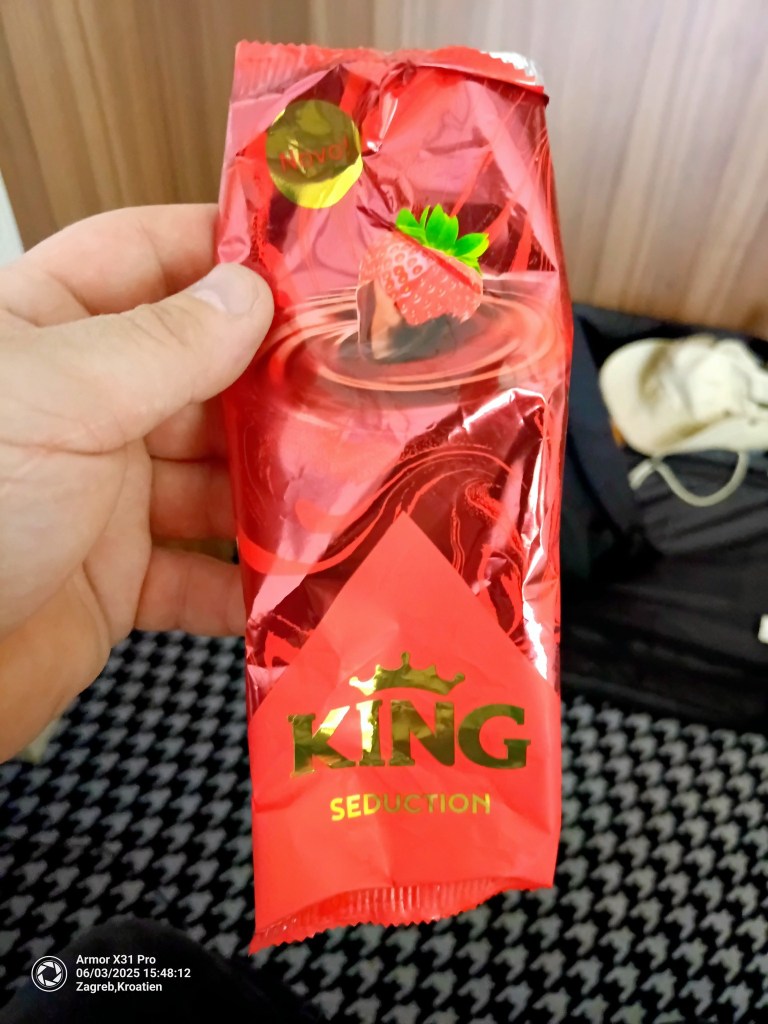
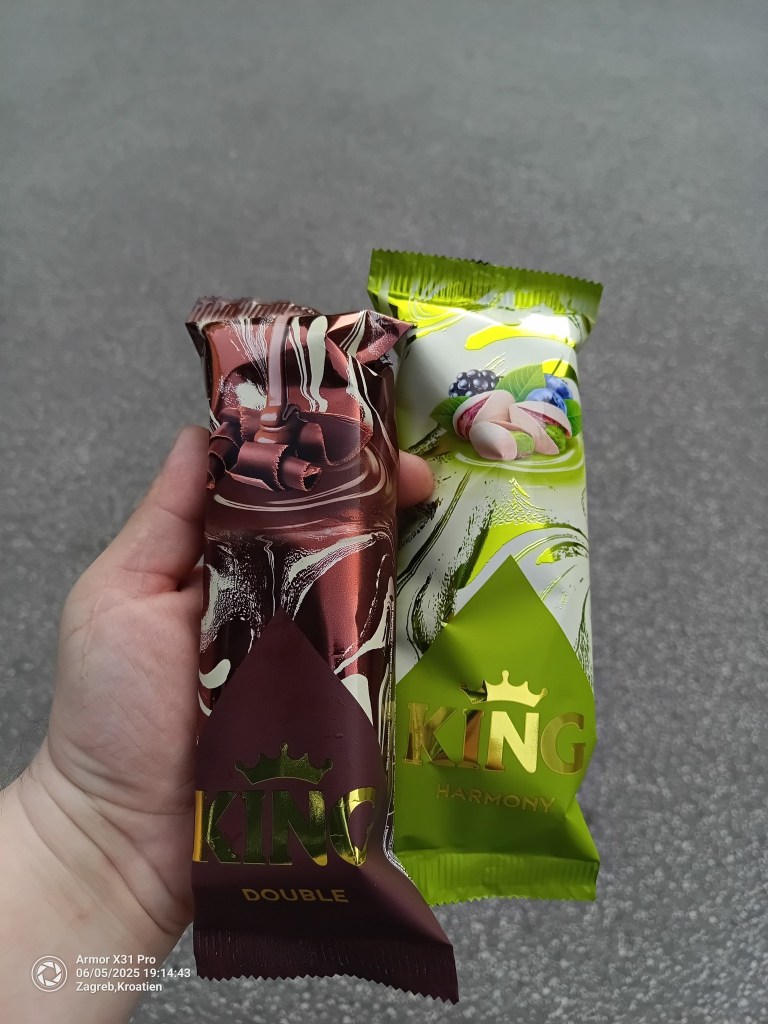
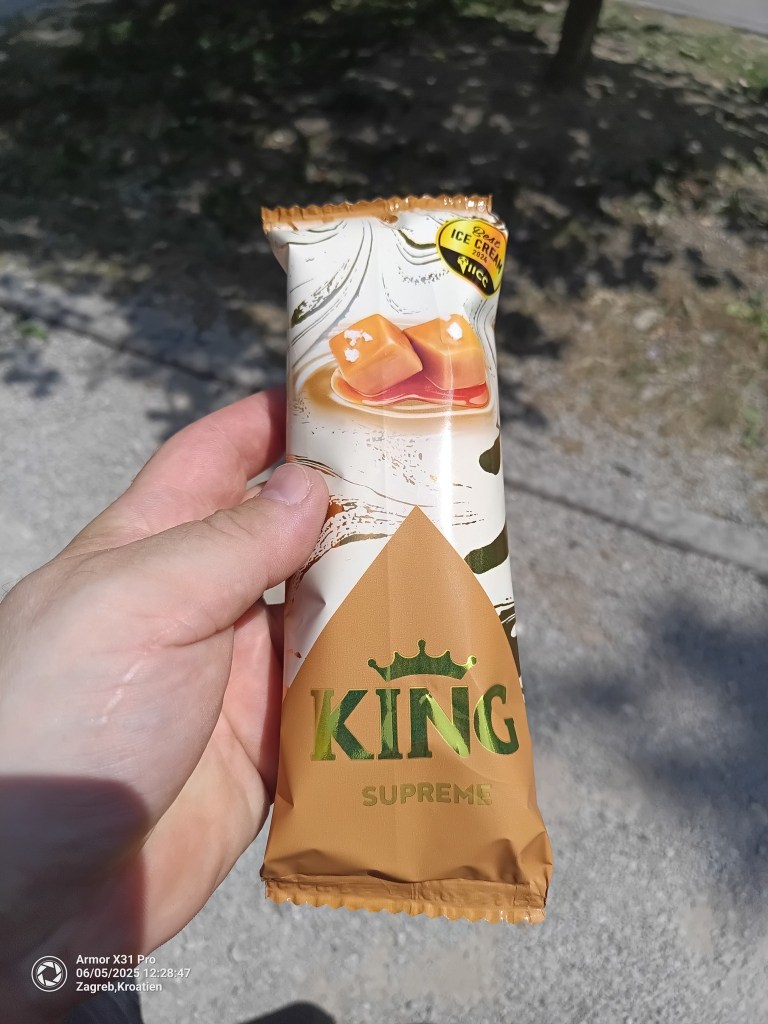
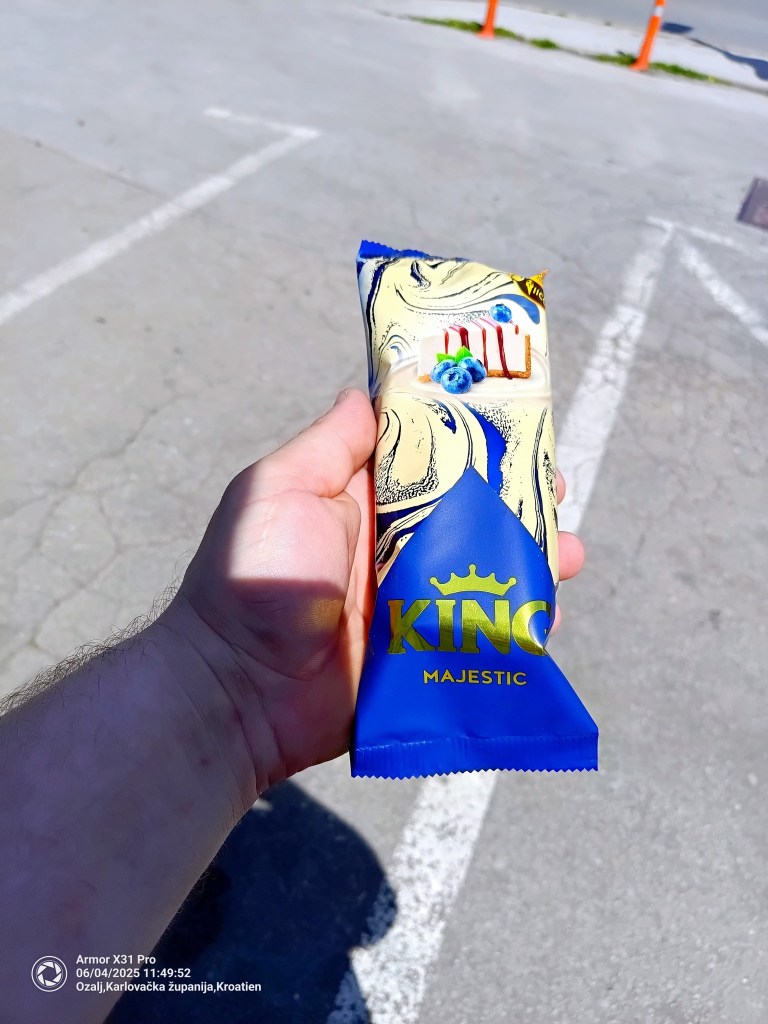
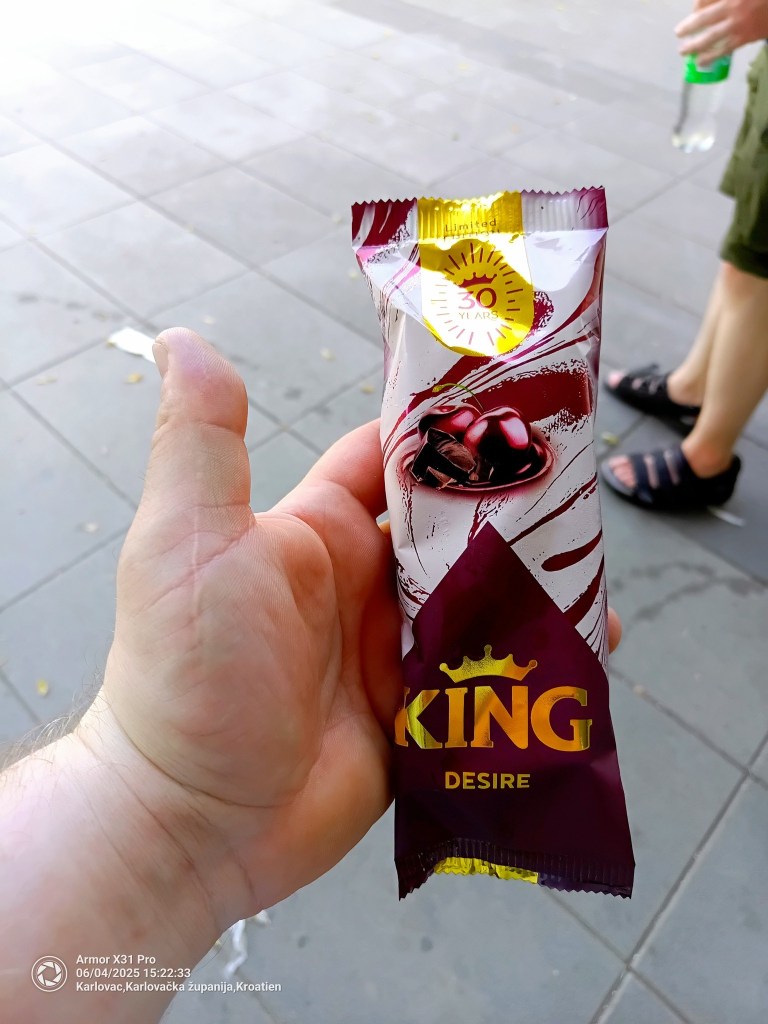
With time to spare, I finally managed to track down King Obsession, the last in the King ice cream series I hadn’t tried (besides the elusive “King Classic 30% manje šećera”—with 30% less sugar—which I never did find in stock). This whole trip, I’d basically made it my side-quest to try every King ice cream variant Croatia had to offer, and the airport was my last chance.
King Obsession lives up to its name—triple-layered, ultra-creamy, a swirl of white and milk chocolate ice cream, layered with cocoa, white chocolate, and a crispy dark chocolate shell. “Više je više” (more is more), as the ads say, and I couldn’t disagree.
My King Ice Cream Power Ranking:
- Majestic (blueberry): Absolute winner—rich, tangy, and just sweet enough.
- Desire (cherry/chocolate): Cherry and chocolate is a classic, and this one nailed it.
- Seduction (strawberry/chocolate): Simple, but perfectly balanced.
- Harmony (mixed berry): A nice blend—refreshing, not too sweet.
- Obsession: Wildly decadent, just a touch too much for my taste, but definitely worth trying.
- Double (chocolate overload): For chocolate fanatics only.
- Supreme (caramel): A bit too sweet; my least favorite, but still better than most “premium” ice creams at home.
I finished my airport breakfast with a King bar—no better way to say goodbye to Croatia.

Travel Home: Zagreb → Vienna → Copenhagen
Our flight out of Zagreb left on time.
- Layover in Vienna: Three hours, but it didn’t feel long. We relaxed, grabbed a meal, and reflected on the trip. Vienna Airport is spacious and easy to navigate, though expensive (note to self: bring snacks next time!).
- Arrival in Copenhagen: We landed, collected our bags, and took the metro to Nørreport Station, where my friend and I split up—he headed home, I took the train back to Frederikssund. I walked in the door just before 20:00, tired but satisfied.
Reflections, Highlights & Practical Tips
Overall, Zagreb left a deep impression on me—one of those trips where you feel like you’ve both seen everything and just scratched the surface. The whole time, I couldn’t shake the weird feeling that I’d been here before (déjà vu, or maybe just a city that feels instantly familiar).
Trip Summary & Costs:
- Hotel: ~4,500 DKK for five nights (split between two)
- Food: Significantly cheaper than Denmark—especially if you go local or hit up bakeries, street food, and supermarket snacks.
- Transport: Trams are a bargain (4–8 DKK per ride), and city taxis were usually under 100 DKK per trip.
- Attractions: Zoo: 4 EUR. Castles and museums: 3–10 EUR. Far more affordable than most EU cities.
Highlights:
- Maksimir Park: Nature, wildlife, local history, and that sense of quiet you only get in big city parks.
- King ice cream: I don’t care how it sounds—best “premium” stick ice cream I’ve had, better than Magnum or anything at home.
- Just wandering: No fixed plan. Discovering small bakeries, local markets, hidden memorials, and a city with real personality.
Travel Tips:
- Download the ZET app for easy tram tickets (works everywhere in Zagreb).
- Always have some cash: Especially in markets or small cafés—cards are not universal.
- Don’t expect English everywhere: It’s widely spoken in the center and by young people, but less so further out—be ready with a few words of Croatian or Google Translate.
- Embrace spontaneity: The best moments came from turning down a random street, talking to locals, or changing plans on the fly.
Closing Thoughts
Zagreb surprised me. It’s a city of hidden corners, historic parks, and neighborhoods that feel lived-in and welcoming. I’m already thinking about a return trip—not just for the sights, but to experience more of the everyday life, the bakeries, and yes, more King ice cream.
If you love travel that mixes big sights with quiet moments and local flavor, put Zagreb on your list.
Thanks for the adventure, Zagreb!
(All photos, words, and ice cream research by Kiba Snowpaw.)



 Kiba Snowpaw
Leave a comment